
 +968 99225895
 sales@iso-certificate-oman.com
ISO Certification In Muscat
ISO Certification in Muscat helps businesses meet international standards for quality, safety, environment, and efficiency. It improves customer trust, ensures regulatory compliance, and boosts competitiveness in both local and global markets. Companies can apply through accredited consultants to get certified in standards like ISO 9001, ISO 14001, ISO 45001, and more.
What is ISO Certification?
ISO certification is a prestigious recognition awarded to companies situated in Muscat if they meet specific international standards. To earn this certification, Muscat companies must implement the required processes, meet ISO standards, and pass an independent audit by a third-party inspection body. Achieving ISO certification in Muscat is a testament to a company’s commitment to quality and excellence. It offers numerous benefits, such as building customer trust, enhancing brand reputation, and improving the company’s chances of becoming an approved supplier for larger organizations
Muscat is the capital city of Oman, one of the largest countries in the Middle East. As a thriving commercial hub, Muscat is home to an international airport located in the Seeb area. The city attracts a diverse community of working-class expatriates from around the globe, offering excellent job and business opportunities. With industries ranging from trading and contracting to consultancy, oil and gas, manufacturing, and tourism, Muscat is a dynamic economic centre.
In this competitive environment, many businesses in Muscat pursue ISO certifications as a mark of quality and excellence. According to a recent study, the ISO certified companies have seen 15% growth in their revenue, these certifications not only enhance the credibility of products and services but also help companies stand out in the market, build trust with customers, and improve their overall reputation.
For businesses in Muscat, ISO certification also provides a structured framework for improving internal operations and managing business risks more effectively. It can help organizations streamline processes, reduce errors, improve employee performance, and meet the expectations of local and international customers. As Muscat continues to attract investment and expand its business sectors, ISO certification can give companies a stronger foundation for sustainable growth and market expansion.
Get Your Free Consultation
OUR PRESENCE
How to Get ISO Certification In Muscat?
Who provides ISO certification in Muscat?
ISO certification is awarded by specialized organizations known as certification bodies. These bodies are authorized to issue ISO certificates and are recognized internationally. Some of these certification bodies even have branches in Oman. To obtain an ISO certificate, a company must undergo a thorough audit conducted by these certification bodies. During the audit, the company’s processes and systems are evaluated to ensure they meet the specific requirements of the ISO standard they are applying for.
If the company successfully complies with the standards, the certification body issues the ISO certificate. However, the certification process doesn’t end there. To maintain the validity of the certificate, the company must undergo annual surveillance audits. These audits ensure that the company continues to adhere to the ISO standards. The ISO certificate itself is valid for three years, after which the company must go through a re-certification process to renew it. This ongoing process helps businesses maintain high-quality standards and continuously improve their operations.
Which type of organizations requires ISO certification in Muscat?
ISO certification is not limited to any specific type of organization—it can be achieved by businesses of any size, industry, or age. Whether your company is a small start-up, a large corporation, a government agency, or a private enterprise, it can qualify for ISO certification. This applies to organizations located in any part of Muscat, including Ghala Industrial Area, Al-Seeb, Al-Khuwair, Rusayl Industrial Area, Misfah, Al Ghubra, Mabela, Al Wadi Al Kabir, Al Azaiba, Mutrah, Ruwi, or other areas in Oman.
Here are some examples of industries and organizations in Muscat that can benefit from ISO certification:
- Information Technology (IT): Muscat is rapidly developing its IT sector to reduce reliance on neighbouring regions like the UAE. With the growing presence of foreign tech companies in the city, local IT firms can gain a competitive edge by adopting ISO standards. Certification helps improve operations, ensure information security, and attract international investors.
- Manufacturing Companies: Muscat is home to many Original Equipment Manufacturers (OEMs) that produce goods for both local markets and export. For these companies, ISO certification is crucial to maintaining quality, safety, and efficiency in their operations. It also helps them meet international standards, making their products more competitive globally.
- Oil and Gas Industry: The oil and gas sector are one of the largest industries in Muscat, with major players like PDO and Shell leading the way. Many smaller companies work as subcontractors or suppliers to these giants. To qualify as a vendor or partner, these smaller companies often need to be ISO certified, as it demonstrates their commitment to quality and safety.
- Agriculture and Fishing: Fishing is one of the oldest industries in Muscat, and organizations involved in fishing, processing, and exports can greatly benefit from ISO certification. It helps them meet regulatory requirements, improve product quality, and gain trust in international markets.
- Logistics and Supply Chain: Companies in the logistics and supply chain sector can achieve significant improvements by following ISO standards. Certification helps reduce workplace accidents, enhance safety protocols, and promote the business as a reliable and safe partner.
- Food Processing, Hotels, and Restaurants: Businesses in the food industry, including hotels, restaurants, and food production or processing companies, can use ISO certification to meet regulatory standards set by Oman’s Ministry of Agricultural, Fisheries, and Water Resources. This not only ensures compliance but also builds trust with customers and strengthens the brand’s reputation.
- Other Industries: With over 20,000 international standards published by ISO, there’s a standard for nearly every industry. Whether you’re in healthcare, construction, education, or any other field, ISO certification can help improve quality, efficiency, and safety. It’s a powerful tool for businesses looking to grow, compete, and succeed in their respective markets.
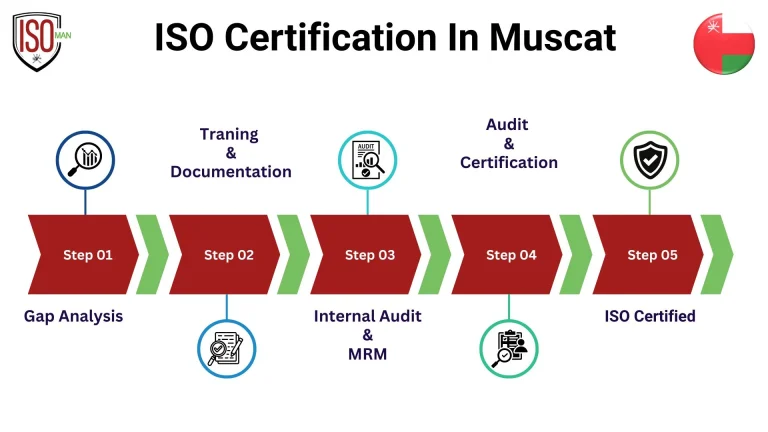
Step-by-step process and requirements to get ISO certification in Muscat
Step 1: Choose the Right ISO Standard
First, decide which ISO standard fits your business (e.g., ISO 9001 for quality management, ISO 14001 for environment, etc.). Each standard has different rules, so pick the one that matches your goals.
Step 2: Find a Good Consultant (Optional)
You can hire an ISO consultant (like TopCertifier or Factocert) to guide you. They’ll check your current processes, fix gaps, and train your team. This makes the process faster and easier.
Step 3: Review Your Current Processes
Look at how your business works now. Compare it to the ISO requirements. Identify what’s missing or needs improvement (e.g., documentation, safety rules, etc.).
Step 4: Train Your Team
Everyone in your company should understand ISO standards. Train employees on new procedures and why they matter. This ensures smooth implementation.
Step 5: Document Everything
ISO requires proper records. Write down your processes, policies, and instructions. Keep everything organized for audits.
Step 6: Internal Audit (Test Run)
Before the official audit, do a mock check internally. Fix any mistakes you find. This prepares you for the real thing.
Step 7: Apply for Certification
Contact an accredited certification body (like Veritas or SGS). They’ll send an auditor to review your business. If you pass, you’ll get your ISO certificate!
Step 8: Keep Improving
ISO isn’t a one-time thing. You’ll need yearly check-ups (surveillance audits) and a full renewal every 3 years to stay certified.
Which are the prominent certifiable ISO standards in Muscat?
Below mentioned are the ISO standards which are very famous in Muscat
- ISO 9001 in Muscat: This is the Quality Management System standard and is often seen as the foundation of all ISO standards. It’s highly popular globally and can be adopted by any type of organization in Muscat, regardless of its industry or size. It helps businesses improve efficiency, customer satisfaction, and overall quality.
- ISO 27001 in Muscat: This standard focuses on Information Security Management Systems. It’s particularly beneficial for IT companies but is also useful for any business that wants to protect its critical data and ensure information security.
- ISO 45001 in Muscat: This is the Occupational Health and Safety Management System standard. Organizations that prioritize workplace safety, especially those working with entities like Petroleum Development Oman (PDO), often adopt this standard to meet safety requirements and create a safer work environment.
- ISO 22000 in Muscat: Designed for the food industry, this standard ensures food safety. Businesses involved in fisheries, food processing, agriculture, restaurants, and other food-related sectors can benefit from this certification to meet regulatory requirements and build consumer trust.
- ISO 13485 in Muscat: This standard is specific to the medical devices industry. Companies that manufacture, process, or supply medical devices can use this certification to ensure quality and compliance with industry regulations.
- ISO 17025 in Muscat: This standard is for testing and calibration laboratories. It helps labs demonstrate their technical competence and ensure accurate and reliable results, which is crucial for maintaining credibility.
- ISO 14001 in Muscat: This Environmental Management System standard is ideal for businesses looking to enhance their environmental performance and sustainability. It’s a generic standard, meaning any type of company in Muscat can achieve it to improve its environmental impact and reputation.
- HACCP (Hazard Analysis and Critical Control Points): This certification is critical for food safety and hygiene. It’s widely used in the food industry to identify, evaluate, and control hazards related to food production, ensuring safe food for consumers.
- CE Mark in Muscat: The CE Mark indicates that a product complies with European Union (EU) health, safety, and environmental protection standards. It’s mandatory for products sold in the European Economic Area (EEA) and is often sought by manufacturers in Muscat exporting to EU markets.
- Halal Certification in Muscat: This certification ensures that products, particularly food and beverages, meet Islamic dietary laws. It’s essential for businesses targeting Muslim consumers or exporting to Islamic countries. Halal certification can also apply to cosmetics, pharmaceuticals, and other consumer goods.
- BIFMA (Business and Institutional Furniture Manufacturers Association): This certification is specific to the furniture industry. It ensures that office and institutional furniture meets safety, durability, and sustainability standards, making it a valuable certification for furniture manufacturers and suppliers.
- RoHS (Restriction of Hazardous Substances): This certification ensures that electrical and electronic products comply with EU regulations restricting the use of hazardous substances like lead, mercury, and cadmium. It’s crucial for electronics manufacturers exporting to the EU or other RoHS-compliant markets.
In addition to these, there are many other ISO standards tailored to specific industries and needs, such as ISO 50001 (Energy Management), ISO 20000-1 (IT Service Management), ISO 22301 (Business Continuity Management), ISO 26000 (Social Responsibility), and ISO 31000 (Risk Management). Each standard serves a unique purpose, helping businesses improve their operations, meet regulatory requirements, and gain a competitive edge in their respective fields.
What will be the advantages for ISO certified organization in Muscat?
- Qualification for Tenders: Being ISO certified allows your organization to participate in various tenders, as many bidding processes require ISO certification as a basic qualification. It opens doors to new business opportunities.
- Brand Building: An ISO certification is a mark of excellence that boosts your company’s reputation. It helps build trust with customers and creates a strong, credible brand image in the market.
- International Opportunities: ISO certification acts as a gateway to global markets. For businesses in Muscat, it makes it easier to export products and services to foreign countries, expanding your reach and growth potential.
What is the cost of applying for ISO Certification in Muscat?
ISO Certification In Muscat cost can differ depending on the size of a company, its complexity and the existing environmental management practices. Possible costs may include consulting fees, training, documentation, internal audits and certification body charges. Smaller organizations may pay less, while bigger organizations may incur higher costs. If you wish to get an accurate price estimate that fits your organization best, please contact us. We are going to accompany you throughout the whole process and present the inclusive description of the expenses that you have to pay to begin your ISO Certification journey.
Why Choose Maxicert for ISO Certification in Muscat?
Maxicert is a trusted ISO certification provider in Muscat, committed to helping businesses achieve international standards with ease and confidence. Our experienced consultants offer end-to-end certification support from documentation and training to audit and certification — ensuring a smooth, efficient, and cost-effective process. We specialize in a wide range of standards, including ISO 9001, ISO 14001, ISO 45001, ISO 27001, and more.
With a deep understanding of local business environments and global compliance requirements, Maxicert provides customized solutions tailored to your organization’s needs. Our transparent approach, timely delivery, and commitment to quality make us the preferred choice for ISO certification in Muscat. Partnering with Maxicert enhances your company’s credibility, efficiency, and market competitiveness, helping you build customer trust and achieve sustainable growth. Choose Maxicert where professional expertise meets excellence in ISO certification services.
GET A FREE CONSULTATION NOW
FAQs
What is the cost of ISO certification in Muscat?
The cost of ISO certification depends on factors such as the size of the organization, the number of standards being implemented, the scope of work, and the certification body chosen. Smaller businesses may pay less, while larger organizations with complex operations may incur higher costs.
How long does it take to get ISO certified?
The timeline for ISO certification varies based on the organization’s readiness and the standard being pursued. On average, it can take anywhere from 3 to 6 months, including preparation, implementation, and the audit process.
Can small businesses in Muscat get ISO certified?
Yes, ISO certification is not limited to large companies. Small businesses and start-ups in Muscat can also achieve certification, as there are standards tailored to organizations of all sizes and industries.
Is ISO certification mandatory in Muscat?
ISO certification is not mandatory but is highly recommended for businesses looking to improve their operations, qualify for tenders, and compete in international markets. Some industries or clients may require it as a condition for contracts.
What happens after getting ISO certified?
After certification, companies must undergo annual surveillance audits to maintain their ISO status. The certificate is valid for three years, after which a re-certification audit is required to renew it.